
AI tools are raising new concerns for aviation investigators after people reportedly used a public NTSB file to recreate the voices of dead pilots.
The issue involved a spectrogram image from a cockpit voice recorder tied to the investigation of UPS Flight 2976 in Louisville, Kentucky.
The National Transportation Safety Board does not publish cockpit audio recordings in its public docket system. But the docket reportedly included a spectrogram, which is a visual representation of sound frequencies.
That image, combined with a public transcript, was enough for people online to create approximations of the cockpit audio.
How The Voices Were Recreated
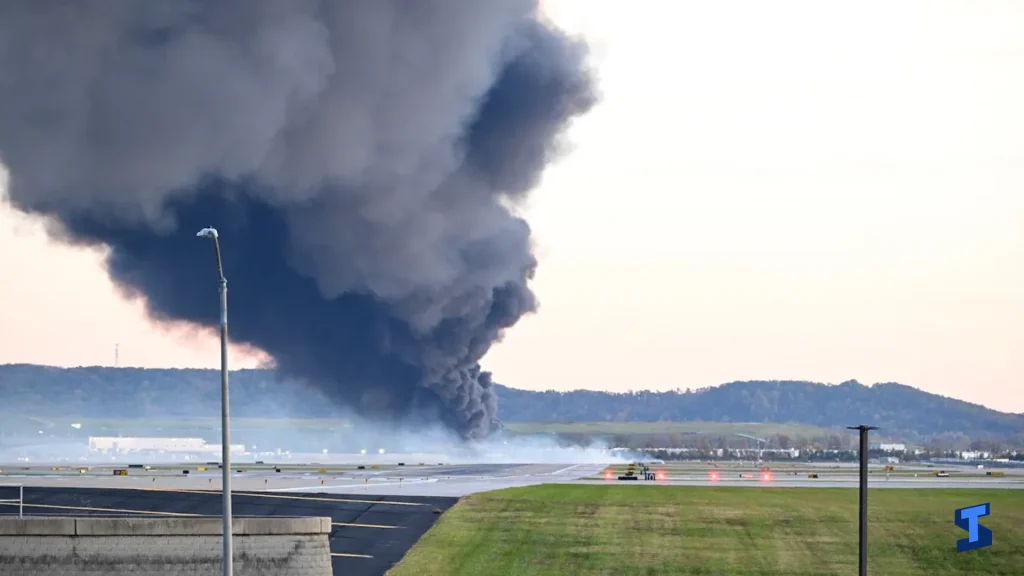
A spectrogram turns sound into an image. It shows frequency, time and intensity in a visual format.
On its own, that may look like a technical investigation file. But with newer AI tools, users were reportedly able to work backward from the image and transcript to generate reconstructed audio.
According to the NTSB, people used AI tools, including Codex, to create approximations of the cockpit voice recorder audio.
That is the part that makes this case different.
The actual cockpit audio was not publicly released. But AI made it possible to recreate something close enough from data that had been placed in the public record.
NTSB Temporarily Restricted Access To Its Docket System
After learning what happened, the NTSB temporarily blocked public access to its docket system.
The agency later restored access on Friday, but kept 42 investigations closed while it reviewed their files. That included the investigation connected to UPS Flight 2976.
The move shows how AI is changing the risk profile for public records.
A file that once looked safe to release may now be more sensitive because AI tools can extract or recreate information from it in ways agencies did not expect.
Why Cockpit Audio Is Treated Differently
Cockpit voice recorder audio is highly sensitive.
These recordings often capture the final moments of pilots and crew members before a crash. They can include fear, confusion, urgent decision-making and private conversations.
For that reason, the NTSB is prohibited by federal law from including cockpit audio recordings in its public docket system.
Transcripts may be released when needed for an investigation, but the original audio is treated with far more care.
The problem in this case is that the spectrogram may have acted as a loophole.
It was not an audio file. But it still contained enough sound information for AI-assisted reconstruction.
AI Is Creating New Problems For Public Data
This incident is not just about one aviation docket.
It points to a much larger issue: public agencies, courts, companies and researchers may need to rethink what “safe to publish” means in the AI era.
A document, image, waveform, dataset or technical file may not appear sensitive at first glance. But if AI can reverse-engineer private, protected or emotionally sensitive information from it, the risk changes.
That could affect how government agencies release accident records, medical data, legal materials, surveillance files and research datasets.
The Ethical Concern Is Bigger Than The Technology
The technical side is impressive. The ethical side is harder.
Recreating the voices of dead pilots from investigation materials raises questions about consent, dignity and harm to families.
These were not actors, public figures or volunteers. They were real people whose final cockpit moments were part of a crash investigation.
Even if the reconstructed audio is only an approximation, it can still spread online as if it were real. That creates another risk: people may treat AI-generated recreations as authentic evidence, even when they are not the original recording.
What Happens Next
The NTSB is now reviewing dozens of investigations to determine whether similar files should remain public.
The agency’s response may shape how accident data is released in the future.
For aviation safety researchers and journalists, public dockets are important because they provide transparency. But this case shows that transparency now has to be balanced against new AI-enabled reconstruction risks.
The bigger lesson is clear: AI does not always need the original file to recreate something sensitive.
Sometimes, it only needs the shadow that file left behind.
via: TechCrunch | Yahoo Tech
